
How Soil Moisture Data Guides Smarter Vineyard Decisions
Most vineyards rely entirely on rainfall. In some regions irrigation is restricted, in others it’s permitted, but in practice very few growers irrigate. Tradition, regulation, and the absence of infrastructure mean that managing natural rainfall is central to vineyard success.
That doesn’t mean water is beyond your control. Understanding how soil holds and releases moisture is one of the most powerful tools you have to balance yield, protect fruit quality, and keep vines healthy in the long term.
Think of the soil profile as a fuel tank. Rainfall tops it up. Vines, weeds, and cover crops draw it down. Without data you can only guess how full the tank really is, or which parts of it the vines are using. With sensors you can see how deep rain infiltrates, how quickly layers dry, and when reserves are running low. The result is better-timed decisions: when to work the soil, how to
manage cover crops, what canopy adjustments to make, and even how to plan harvest.
This blog post looks at why soil moisture matters even in vineyards without irrigation, the signals worth watching, and how linking soil data with climate monitoring and AI can give you foresight rather than just hindsight.
How Water Moves Through Soil
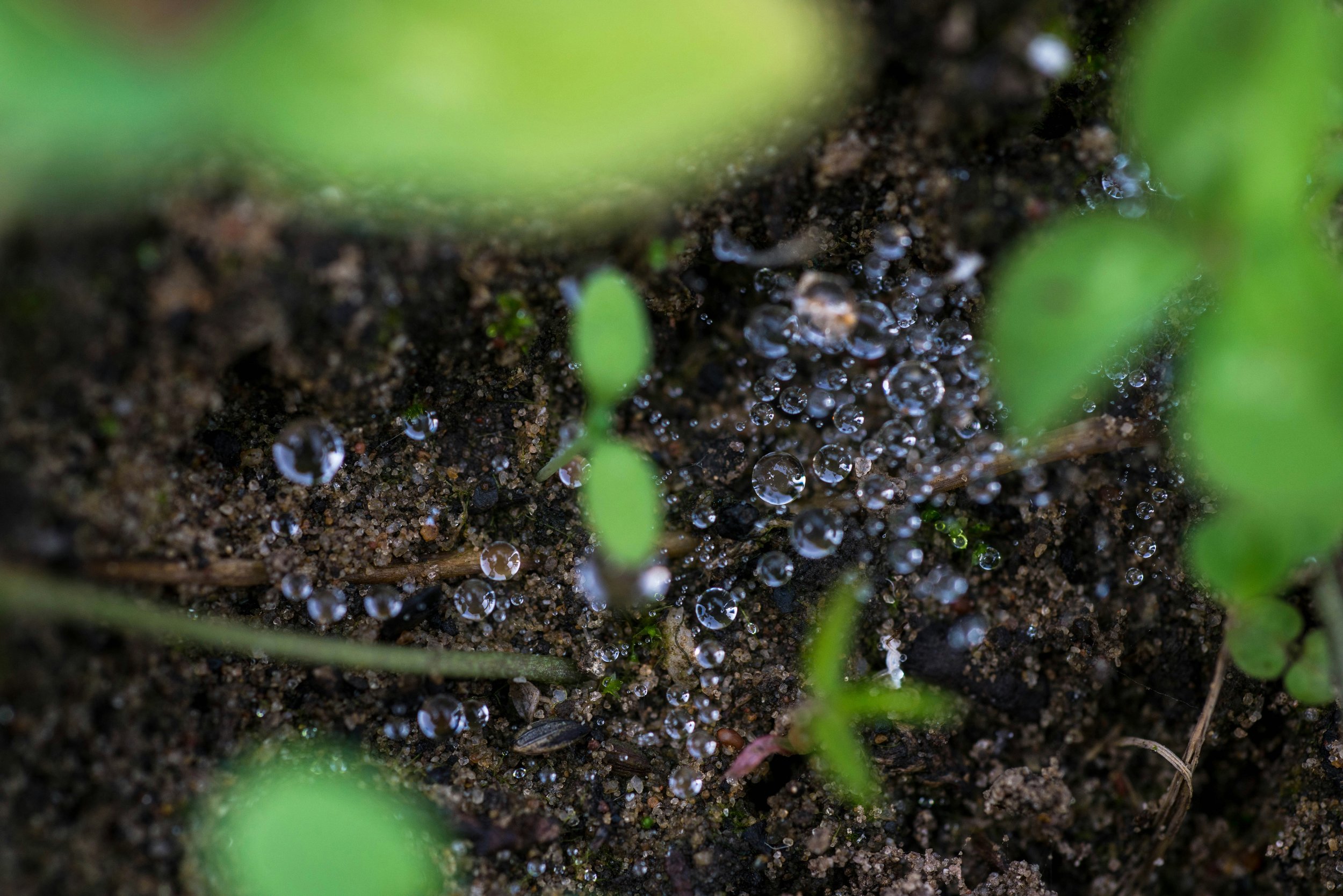
Every block behaves differently, but water follows some predictable rules. When it rains, part of that water evaporates straight off the surface. The rest seeps into the ground. How much stays there depends on soil type, structure, and organic matter.
Topsoil (0–20 cm): Quick to wet, quick to dry. Cover crops and weeds often dominate here.
Mid-layer (20–60 cm): The main working zone for vine roots. Moisture here sustains growth between rain events.
Deep layer (60 cm–1.2 m): Critical for resilience. Older vines draw on this zone when surface layers dry out.
Sensors placed at different depths show exactly what’s happening. For example, after a rain you might see the top 20 cm jump and then fall within days, while 40–60 cm barely moves. That tells you most of the rainfall never reached the active root zone. Without that knowledge it’s easy to overestimate how much water vines really have.
Rainfall, Infiltration, and Root Zone Reality
Not all rainfall is equal. The amount that benefits vines depends on how much infiltrates and where it ends up.
Light showers (5–10 mm): Often wet only the surface. They can green up cover crops but usually don’t reach vine roots.
Steady rain (20–30 mm): More likely to recharge the mid-layer, especially in loam or sandy soils.
Heavy downpours: On compacted or sloped ground, much of the water may run off instead of soaking in.
Soil sensors reveal these differences as “steps” in the data. A genuine infiltration event shows as a rise at depth. A surface wetting creates a small blip that disappears quickly. By watching these steps, you know not just how much rain fell, but how much actually reached the vines.
Moisture and Temperature Together
The probes Aurelia uses measure both water and soil temperature at multiple depths. That combination gives a much clearer picture of what’s happening underground.
Root activity: Vines start drawing water once soils are warm enough. Tracking temperature at depth shows when roots really “wake up” in spring, and how quickly activity slows in autumn.
Budbreak and growth stages: Soil temperature trends are one of the earliest signals of when growth will begin. Knowing this in advance helps with pruning finish dates, frost protection, and early sprays.
Nutrient cycling: Warm soils encourage microbial activity, which in turn drives nutrient release. Measuring both moisture and temperature lets you time fertiliser or compost applications for when vines can make the most use of them.
Field access: Cold, wet soils are at greatest risk of damage from machinery. With both readings, you know when conditions are workable.
By combining moisture and temperature at multiple depths, you see the full environment your vines are growing in. This deeper view is far more reliable than surface checks or weather station data alone.
Vine Responses and Water Stress
Grapevines cope well with dry conditions, but they still follow clear rules when water becomes scarce. Early in the season moisture is needed for canopy development and fruit set. Later, a mild deficit can help control vigour and improve fruit quality. But prolonged stress reduces photosynthesis, slows ripening, and shrinks berry size.
Soil moisture trends show this stress before it’s visible. For instance:
· A gradual decline in mid-layer moisture means vines are steadily depleting reserves.
· A sharp fall signals demand is outpacing supply.
· Flat lines at depth show vines have no fallback reserves.
By the time leaves yellow or growth stalls, it’s often too late to act. Acting earlier, with soil data in hand, means you can adjust canopy management, reduce competition from cover crops, or change field operations to help vines cope.
Practical Decisions Guided by Soil Data
Timing Work in the Vineyard
Running machinery on wet ground compacts soil, squeezing out the pores that let water infiltrate. Compaction is hard to reverse. Probes show how long it takes soils to drain after rain, so you know when it’s safe to get in with tractors or sprayers. That means less guesswork and healthier soils in the long run.
Managing Cover Crops
Cover crops bring benefits including soil structure, biodiversity, and nitrogen but they also compete for water. If moisture data shows reserves are declining early, rolling or mowing cover crops can save water for vines. If deep layers are still full, you might keep them longer to manage vigour. With data, cover crops become a flexible tool rather than a fixed routine.
Canopy Management
Leaf removal, trimming, and shoot positioning all affect water demand. Soil data helps you time these choices.
Early season: With good reserves, you can maintain a larger canopy to drive photosynthesis and set fruit.
Mid-season: If reserves are running low, trimming reduces demand and slows depletion.
Pre-veraison: When water is very limited, leaving more leaf area protects grapes from sunburn while still supporting ripening.
These decisions are common sense, but data helps you choose with confidence instead of relying on feel alone.
Planning Harvest
Soil moisture influences berry size, uniformity, and composition. If data shows sharp declines in water availability near veraison, you can expect smaller berries and higher concentration. Knowing this in advance helps with yield forecasting, harvest planning, and even marketing decisions.
Connecting Soil Data with Climate and AI
Soil probes give a clear picture below ground. Climate sensors explain the conditions above ground: temperature, humidity, solar radiation, and vapour pressure deficit. Linking the two tells you not only what the soil can supply, but what the vine is being asked to deliver.
AI builds on this by recognising patterns across seasons and sites. It can connect soil behaviour with forecast rainfall, historical yields, and fruit quality outcomes. Instead of reacting when soil dries out, you can anticipate when and where stress will bite.
For example, Aurelia’s forthcoming AI system will combine real-time soil data with local weather forecasts. If sensors show declining reserves at 40–60 cm and a heatwave is coming, the system can flag the risk of stress and suggest canopy or cover crop adjustments before the damage is done. Over time it learns how your vineyard behaves, tailoring advice to your soils, vines, and management style.
Conclusion
Even in vineyards where irrigation isn’t the norm, soil monitoring is transformative. It shows how much rainfall reaches the root zone, how quickly reserves are being used, and when vines are at risk of stress. Because probes measure both moisture and temperature at multiple depths, you see the complete environment that drives vine growth.
Combined with climate data and AI, this insight gives you foresight—so you can plan operations, protect vine health, and steer fruit quality.
Your soil is the vineyard’s fuel tank. Seeing how full it is, how warm it is, and how fast it’s changing gives you the confidence to make decisions that protect this season’s harvest and the long-term resilience of your vines.